Top of the Deck · Lead
DUTIES
Minister Parmar formally rejects US softwood preliminary findings — "punitive duties and tariffs" framed as harm to both economies
BC Minister of Forests Ravi Parmar issued the Province's official response to the US Department of Commerce's preliminary results from its seventh administrative review of antidumping (AD) and countervailing (CVD) duty orders on Canadian softwood lumber. The Minister's statement, dated April 9, 2026, characterizes the duties as "unwarranted and unfair" and states that "these duties serve only to damage both of our economies by harming B.C. and Canadian communities, and increasing the cost of housing."
The framing is significant for two reasons. First, it confirms BC's position that the AD/CVD stack — even at the lower preliminary 24.83% combined rate before the Section 232 tariff — is not negotiable on its own terms. Second, by tying the duty argument explicitly to US housing costs, the Province is signaling that any litigation or trade-table response will be argued on consumer impact, not just industry harm.
The release does not announce new programs, new financial support, or new countermeasures. Operators reading this should treat the statement as positional — important for understanding the Province's posture going into the August 2026 final ruling, but not material to current quarter operations.
Top of the Deck · Second
FIBRE SUPPLY
Box Lake Lumber secures 5-year non-replaceable forest licence in TFL 3 — 445 truckloads/year for split-rail fence value-add
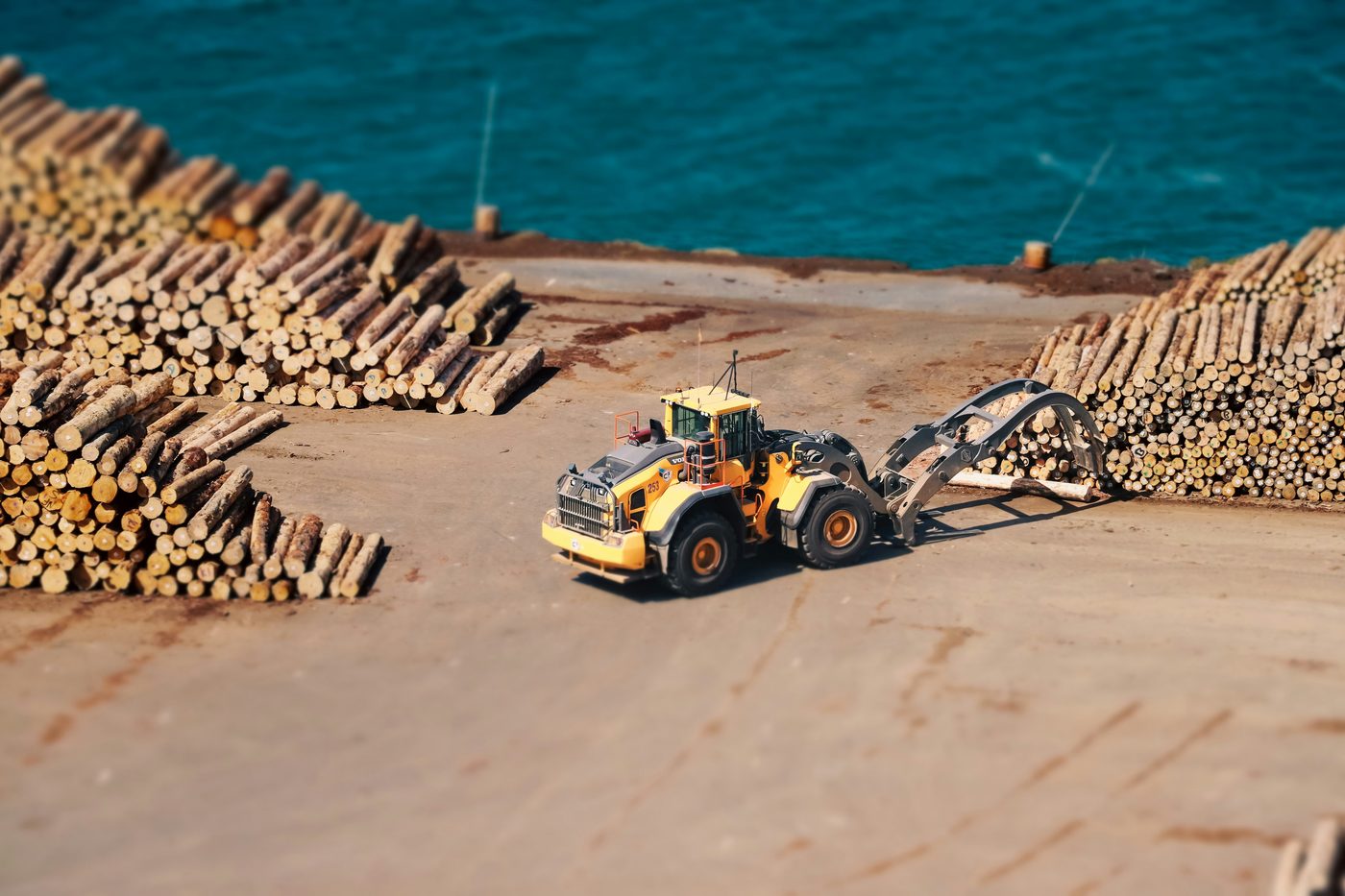
The Province awarded Box Lake Lumber Products a non-replaceable forest licence delivering approximately 445 truckloads of logs per year over five years. The fibre is sourced from unlogged steep mountain slopes and fire/pest-damaged salvage material within Tree Farm Licence 3 — held by Interfor — in the Kootenay region, approximately 50 kilometres from Nelson.
The deal structure is the operationally interesting part: a competitive bid opportunity targeting value-added wood manufacturing companies, awarded as non-replaceable. That means the licence terminates with the volume — there is no automatic renewal claim. For Interfor, the structure cleanly separates salvage and steep-slope material from their replaceable Annual Allowable Cut (AAC) calculations. For Box Lake, it provides five years of fibre certainty against which to plan capital.
The company manufactures split-rail fencing distributed across North America and Europe. Daniel Wiebe, Box Lake president, was quoted that the licence "will help us secure logs to keep our mill operating." The release frames the award as part of the Province's value-added accelerator program.
The Cut · three things to know
1 ·BCTS legislative amendments — up to 800,000 m³ of additional fibre access targeted at small operators. Province introduced amendments expected to deliver up to 17,700 truckloads (~800,000 m³) of additional fibre supply through BC Timber Sales. Approximately 500,000 m³ is expected from salvage licences; the remaining ~300,000 m³ from commercial thinning and stewardship. Targets: logging contractors, small/medium value-added mills, pulp sector operators, independent manufacturers without timber tenure, First Nations partners. Released March 30, 2026.
[Source: BC Government News.]
2 ·Forest Practices Board names new chair. Governance change at the independent body that audits compliance with the Forest and Range Practices Act (FRPA). Operationally relevant for licensees: chair tenure typically signals the audit posture for the next 24 months.
[Source: BC Government News.]
3 ·Cariboo-Chilcotin and 100 Mile House public engagement on forest management. The Province has invited residents in two Cariboo Timber Supply Areas to participate in regional forest management consultation. For licensees in those TSAs, this is the start of an input window that historically influences the next AAC determination cycle.
[Source: BC Government News.]