Top of the Deck · Lead
REGULATORY
Ottawa puts $400 million behind forest sector transformation and makes fibre supply priority one — task force report and Action Plan land in Victoria
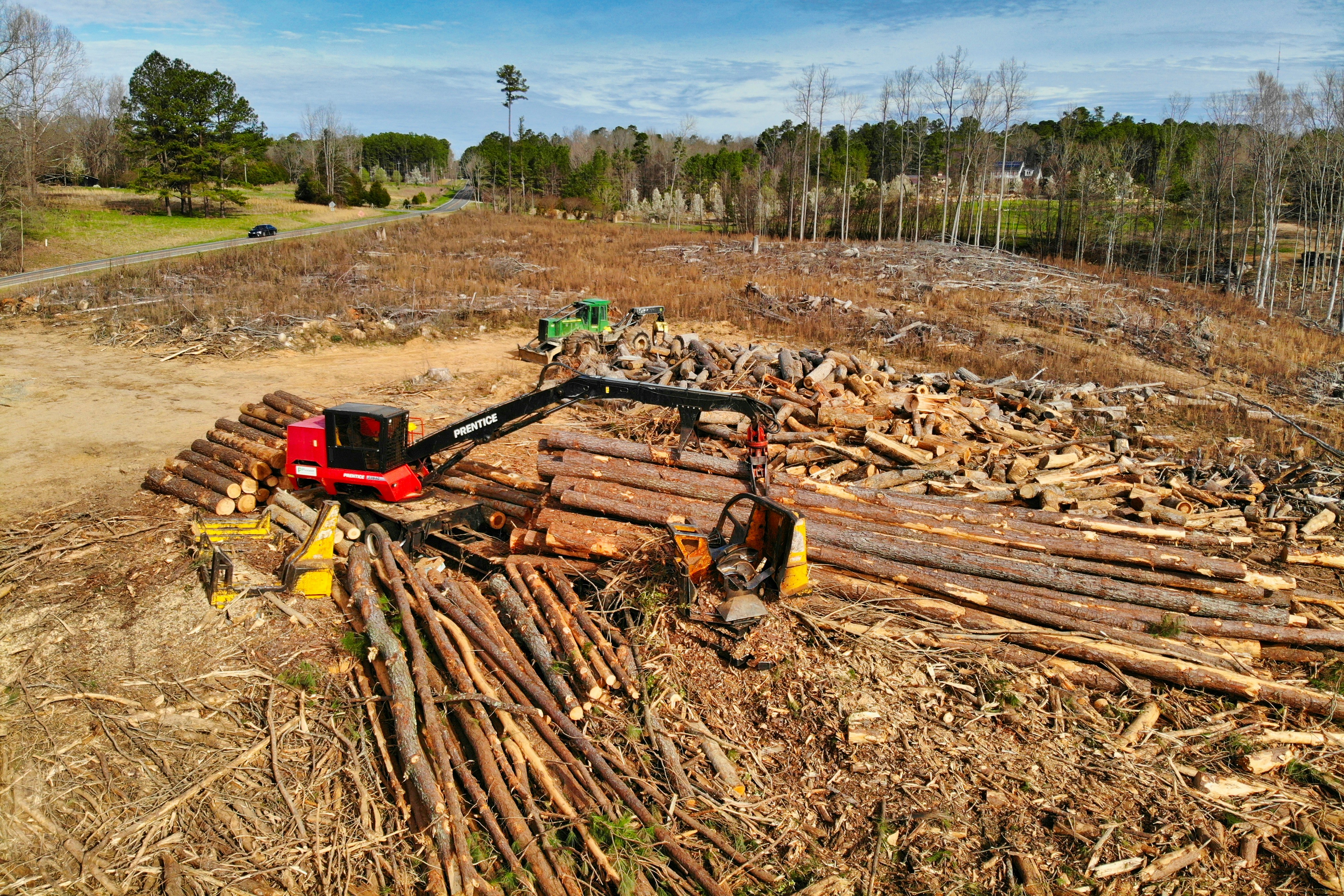
On June 3 in Victoria, federal Energy and Natural Resources Minister Tim Hodgson released the Canadian Forest Sector Transformation Task Force's final report and attached money to it: an additional $400 million through Canada's Regional Development Agencies, split between $300 million under the Regional Tariff Response Initiative — financing for small and medium-sized businesses pivoting toward market diversification — and a new $100-million Regional Development Fund for regions significantly impacted by forest-sector disruptions. The BDC Softwood Lumber Loan Guarantee Program gets higher maximum loan amounts and letters of credit, and BDC adds two new direct-loan programs that explicitly reach harvesting and pulp-and-paper operations. A further sum of close to $130 million goes to 56 projects across the country. The task force was launched January 19 and delivered its report to the minister April 16; the public release came June 3, with the funding attached.
The next day, same city: Hodgson launched the Forest Sector Action Plan, the implementation vehicle for the report's recommendations, built on four priorities — and the first listed is 'securing a competitive and predictable supply of wood fibre.' Investment in modernization, market expansion at home and abroad, and worker and community supports round out the four. Federal, provincial and territorial ministers took up implementation at the Canadian Council of Forest Ministers meeting June 4-5, and Ottawa committed to a formal Forest Sector Strategy by the end of 2026. The federal framing concedes the structural fact that matters most: provinces and territories own and manage nearly 90 percent of Canada's forests, so the fibre-access file runs through provincial governments — which in BC means the same government currently moving Bill 14's BCTS expansion through the legislature (Edition 009 primer).
Operational read. Industry reaction was fast and aligned — FPAC, COFI and Unifor all publicly urged quick implementation within a day of the release, and Hodgson himself called the forest sector the trade 'canary in the coal mine' in comments ahead of the announcement. For BC operators, the watch items are eligibility mechanics: which businesses clear the SME bar for the $300-million tariff-response stream, how the $100-million fund defines 'significantly impacted' regions, and how BDC prices the two new direct-loan windows for harvesting contractors. The scale question stays open. Ottawa counts over $2 billion in forest-sector measures since August 2025; Business in Vancouver counts 21 permanent or indefinite mill closures in BC since 2023. The distance between those two ledgers is what the Action Plan now has to close.
Top of the Deck · Second
TRADE
Two weeks to USMCA Round 2: Trump 'not looking to renew,' Greer blames Canada, and the ITC bench refills
On June 10, President Trump told reporters he is 'not looking to renew' CUSMA ahead of the July 1 review milestone — adding 'we don't need anything that Canada has.' The mechanics if July 1 passes without a renewal commitment: the agreement does not die; it stays in place subject to annual rolling reviews for up to 10 years. What is at stake is certainty — CBC pegs the agreement as covering roughly $1.3 trillion in cross-border trade and shielding about 90 percent of Canadian exports from US tariffs. The day before, US Trade Representative Jamieson Greer publicly blamed Canada for the lack of progress in bilateral trade talks (Dow Jones via Morningstar, June 9). Two data points, one direction: the temperature is dropping ahead of the review.
The trade-remedy machinery is being re-staffed at the same time. On June 1, the White House announced three new nominees to the US International Trade Commission — Peter-Anthony Pappas, Bart Thanhauser and Samuel Negatu — on top of the two nominated in January (David Foley Jr., Brett Doyle). If confirmed, they restore the ITC to its full six-member bench for the first time since 2017. The US Lumber Coalition applauded the move and urged the Senate to confirm, framing it as ensuring 'enforcement of US trade remedy laws.' The ITC is the body that makes injury determinations in the softwood lumber file; a full bench removes quorum risk from every pending review on its docket.
Operational read for BC. The BC Lumber Trade Council's position, published in the Vancouver Sun the same week as the federal package, is that the CUSMA review is BC's best chance to resolve the softwood lumber dispute — folding lumber into the broader table rather than waiting out annual duty reviews. Round 2 of the US-Mexico bilaterals runs June 16-17 in Washington; Canada remains outside the room (Edition 009). Trump's June 10 comments are the strongest signal yet that the July 1 milestone passes without a 16-year renewal commitment. For BC producers the live question is whether softwood gets folded into the CUSMA table at all — or stays in the parallel duty track, where final administrative-review rates are due between late August and October.
The Cut · three things to know
1 ·Canfor buys PinkWood's Calgary I-joist business for $68 million — value-added diversification, 5x EBITDA. Canfor (TSX: CFP) announced June 9 an agreement to purchase PinkWood Ltd.'s I-joist business for $68.0 million including working capital — $55.0 million at closing, $13.0 million over five years. PinkWood is the largest I-joist facility in Western Canada: 120 employees in Calgary, 46 million linear feet of production capacity, founded 2009. Canfor says the price represents a 5 times EBITDA multiple including identified synergies; PinkWood keeps its name and runs as a wholly owned subsidiary, with closing expected in the third quarter. CEO Susan Yurkovich's framing: the deal 'complements our operations in Western Canada by enhancing product diversification.' The read for BC: a Vancouver-headquartered producer is putting capital into Alberta engineered-wood capacity — the value-added end of the chain — while commodity SPF stays pinned under the duty stack.
[Source: GlobeNewswire / Canfor Corporation.]
2 ·Lumber futures print an 8-month high — US$620 per thousand board feet on June 10. CME lumber futures reached US$620 per thousand board feet on June 10 — an 8-month high per Trading Economics, up roughly 6.5 percent over the past month and 1.5 percent year-over-year. The backdrop, per Fastmarkets reporting this spring: US domestic production has not fully offset reduced Canadian imports, and Canada still supplies roughly 30 percent of US lumber consumption despite the duty stack. Display-only, as always: these are historical prints, not forecasts. The structural item to track alongside price is the duty timeline — preliminary combined AD/CVD rates of 24.83 percent (down from the current 35.16 percent) were announced in April, with final results due between late August and October.
[Source: Trading Economics — Lumber.]
3 ·Senate's 'Canada on Fire' report: 15 recommendations, a federal coordination office, and a national aerial fleet. The Senate agriculture and forestry committee released 'Canada on Fire' June 10 — its diagnosis is that wildfire has outgrown the response system. The committee's 15 recommendations include a federal wildfire coordination office, a national aerial firefighting fleet, national wildfire risk mapping, strengthened operational capacity for Indigenous communities, a national reforestation policy and fire-resilient building standards. The baseline the report works from: 2023's season burned 14.6 million hectares across 6,837 fires and forced more than 232,000 people to evacuate. For BC operators this lands as architecture catching up to spending — the $317-million CIFFC 10-aircraft federal reserve fleet (Edition 008) and Parks Canada's $47.8-million program (Edition 009) are exactly the kind of assets the Senate now wants formalized under a single coordinating authority.
[Source: Senate of Canada — AGFO Committee report page.]