Top of the Deck · Lead
REGULATORY
BC's log-haul subsidy — nearly $33M a year quietly feeding pulp and pellet mills — draws fire as 'subsidized logging,' putting a fibre lifeline on the political map
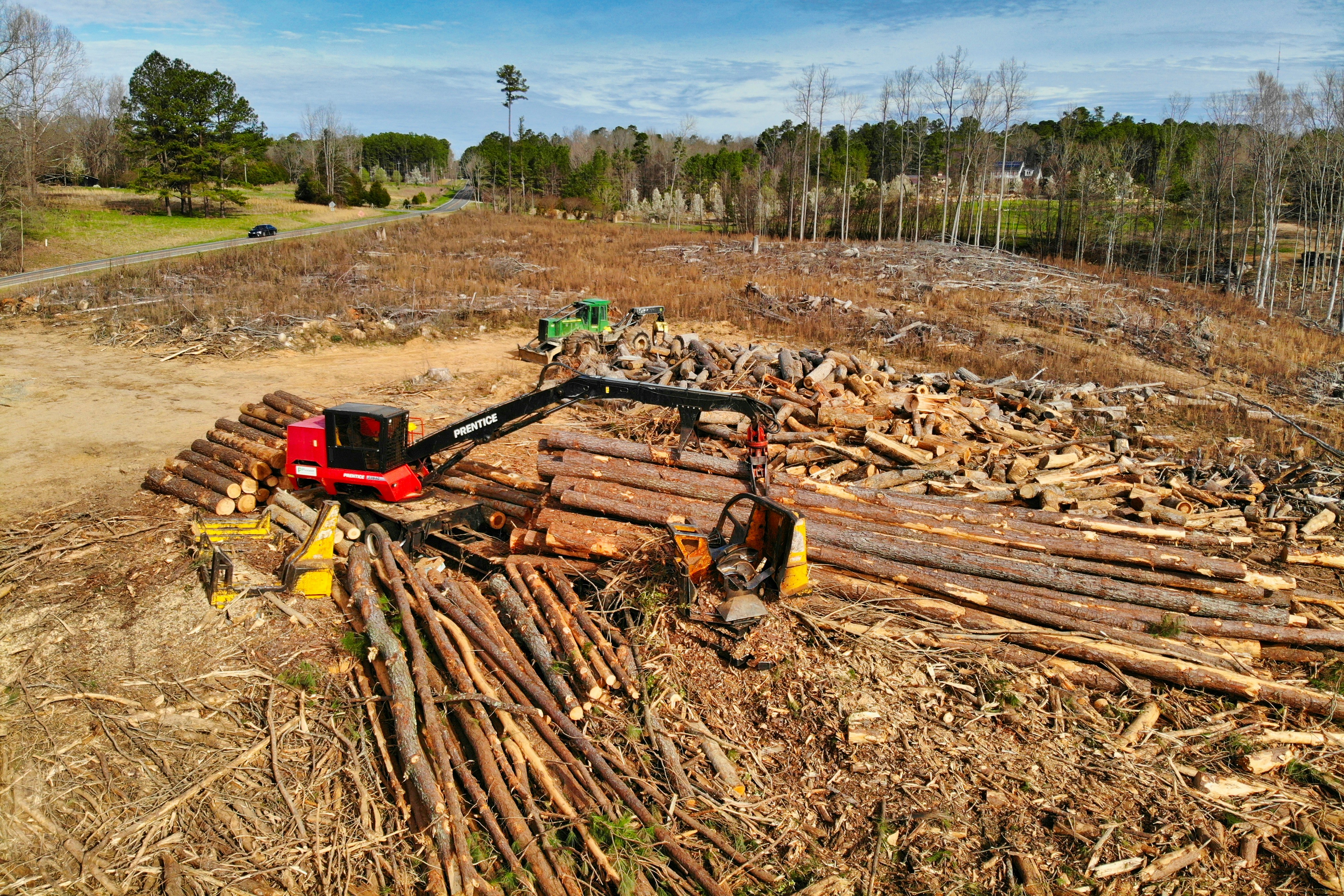
British Columbia paid logging companies nearly $33 million in 2023 to defray the cost of trucking 'low-value' logs from remote cutblocks to distant pulp and pellet mills, according to records compiled by The Tyee from the Forest Enhancement Society of BC (FESBC), the government-funded body that reports to Forests Minister Ravi Parmar. Of that, more than $7.1 million went to 15 companies hauling logs to south-coast pulp mills (Harmac, Crofton and Howe Sound), and a further $25.2 million underwrote 21 Interior projects feeding Canfor's Prince George and Skookumchuck pulp mills, West Fraser and Millar Western at Quesnel, Kruger at Kamloops, Mercer at Castlegar, and Drax's Houston pellet plant. The Tyee says the subsidies have continued since at a reduced rate — roughly $18 million over the two most recent fiscal years.
For operators, the number matters less than what it reveals: as sawmills curtail and close, the chips and pulp logs that keep pulp and pellet mills running have to travel farther, and the haul subsidy is the marginal economics that still makes that fibre pencil. Canfor Pulp was the single largest beneficiary, with four grants worth more than $6.2 million; the company's vice-president of corporate affairs called the support 'supplemental,' amounting to 'one per cent of our total fibre costs,' and said it helped offset supply disruptions from sawmill curtailments. West Fraser said a $2.5-million grant was 'fully utilized' to truck non-economical pulpwood nearly 500 kilometres from the Smithers region to its Quesnel mill, maintaining operations and 'aiding wildfire risk reduction.' FESBC executive director Jason Fisher said the grants cover only the gap between what a mill can economically pay and the real cost of moving fibre that would otherwise be 'burned in piles' as slash.
Operational read. The political exposure is now the risk to watch. Conservation North director Michelle Connolly argues the program is 'subsidizing the logging and shipping of the best wildlife habitat,' and former BC Liberal MLA Mike Morris questions whether hauling 'low-value' timber squares with FESBC's stated wildfire- and habitat-mandate. Whatever the merits, the brief for fibre operators is concrete: a program that quietly underwrites pulp- and pellet-mill fibre flow — and that companies themselves credit with keeping mills supplied through the curtailment wave — has acquired a public target. If environmental and political pressure forces FESBC to trim or re-scope the haul subsidies, the marginal economics of long-distance pulp-log and chip supply get worse precisely where the fibre is already hardest to reach.
Top of the Deck · Second
SAFETY
Saw Creek wildfire shuts 116 km of Highway 1 at Lytton as the BC fire season opens on a scarred community
An out-of-control wildfire discovered on Friday, June 19 about three kilometres south of Lytton grew to roughly 600 hectares (six square kilometres) by Saturday and forced the closure of Highway 1 for 116 kilometres between Boston Bar and Cache Creek, according to the BC Wildfire Service and the Thompson-Nicola Regional District (TNRD). At its peak the BC Wildfire Service had about 130 firefighters and nine helicopters assigned, with structure-protection crews defending communities; the blaze was designated a 'wildfire of note' and is suspected to be human-caused. The TNRD declared states of emergency in Lytton and Blue Sky County, placing roughly 47 to 50 properties under evacuation order and about 168 to 170 on alert, while the Lytton First Nation ordered out the Klahkamich (IR 17) and Kitzowitz (IR 20) reserves and the Siska Indian Band issued alerts further south.
By June 21 cooler temperatures and lighter winds let crews hold ground, and the regional district downgraded evacuation orders on more than 40 properties to alert, though the fire remained active. The disruption is the operational story: Highway 1 through the Fraser Canyon is the main freight artery between the Lower Mainland and the Interior, and a multi-day closure interrupts the movement of logs, lumber, chips and pulp between coast and Interior mills at the start of the season. Lytton First Nation rights-holders and Village of Lytton residents are again displaced from a community that lost two lives and nearly all its buildings in the June 30, 2021 fire; despite more than $140 million in federal and provincial recovery funding, only a few dozen homes have been rebuilt and about 75 residents now live there, down from 210 before 2021.
Operational read. The timing matters more than the size. A 600-hectare fire is modest by BC standards, but an early-season, human-caused ignition that closes the province's primary Interior freight corridor — days before the five-year anniversary of the Lytton disaster — is a preview of the summer's logistics risk, not an outlier. Federal forecasts flagged BC for the highest and most sustained wildfire danger in the country this year. For operators the watch items are concrete: highway and rail reliability through the canyons, crew and helicopter availability as ignitions multiply, and whether fire-driven road closures begin to constrain the same long-distance fibre hauls that the FESBC subsidies (see lead) are paying to keep moving.
The Cut · three things to know
1 ·Sierra Club BC uses the World Cup to put BC old-growth logging in front of a global audience. Sierra Club BC launched an advertising campaign this month — billboards, SkyTrain stations, streaming, TV and online — timed to the FIFA World Cup matches in Vancouver, asserting that an average of 100 soccer fields of BC old-growth forest are still clear-cut every day, a figure drawn from the group's 2025 'Closer to the Brink' report. BC's Forests Ministry responded that the province has 111,000 square kilometres of old forests, of which 89,000 — about 80 per cent — are protected, deferred or uneconomic to harvest. The read for operators: the social-licence contest over old-growth is now being fought on an international stage, and the deferral framework remains the province's primary line of defence.
[Source: Vancouver Sun.]
2 ·Federal task force report quantifies the decline: 23 sawmills closed since 2022, softwood output down 42% since 2004. The Canadian Forest Sector Transformation Task Force report, 'Canada's Transformed Forest Sector: Competitive, Resilient, Relevant,' frames the sector as losing competitiveness despite Canada holding nearly nine per cent of the world's forests. Between 2022 and February 2026, the report states, 23 sawmills closed in Canada and more than 70 others announced temporary curtailments, while softwood lumber production has fallen 42 per cent since 2004. It attributes the slide to US duties and tariffs, transportation and harvesting costs, regulatory complexity, and uncertainty over long-term timber supply — and pitches a federal 'playbook' to restore competitiveness. For BC, the most fibre-constrained jurisdiction, the report is the macro backdrop to every curtailment and haul-subsidy story in this edition.
[Source: Supply-Build Canada, via Tree Frog Forestry News.]