Top of the Deck · Lead
MARKETS
Lumber prints an 8-month high — but it's the duty stack, not housing, doing the lifting, and that cuts against BC volume
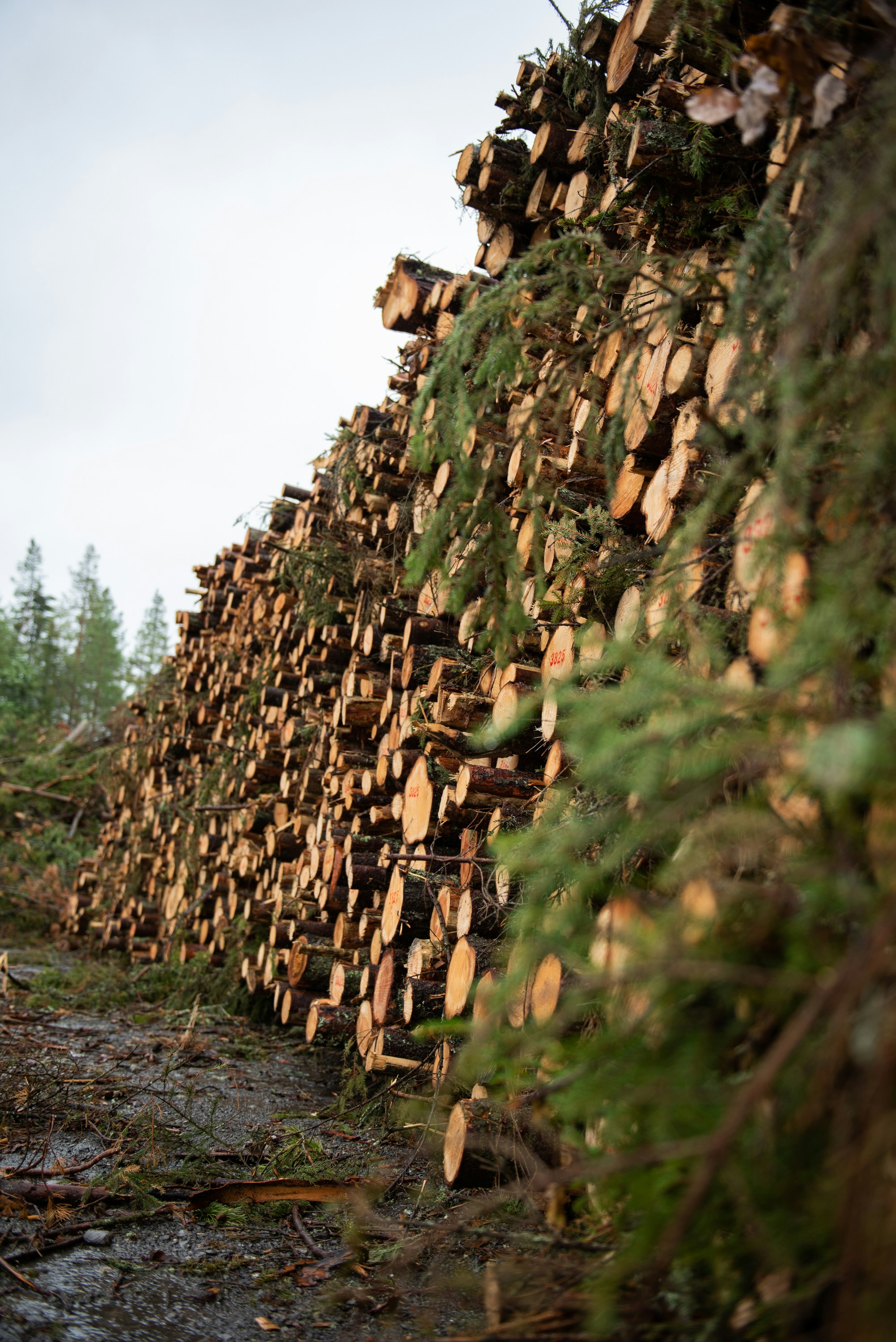
Benchmark random-length lumber climbed past US$630 per thousand board feet this week — the highest level since October 2025 — before easing back toward US$624, according to Trading Economics' benchmark CFD series. The move caps a roughly 8% gain over the month. The pull is not demand-side: US housing starts fell 15.4% in May and builders remain cautious. It is supply and policy. US domestic production has not offset reduced Canadian imports, and buyers are accelerating purchases ahead of two known step-ups in the cost of Canadian wood.
Those step-ups are the operational substance. The US Commerce Department's preliminary seventh-review rate cut combined antidumping and countervailing duties on most Canadian softwood to 24.83% from 35.16% in April, but the final determination is not expected until late August — and possibly October if fully extended — leaving the headline rate unsettled. Stacked on top is a separate 10% Section 232 tariff on softwood timber and lumber, in force since October 2025 and scheduled to bite further in August. Trading Economics puts the combined effective burden near 35.9%. With the final number still pending, importers are front-running it: pulling fibre forward now to beat a worse rate later, which lifts near-term prices regardless of the soft housing backdrop.
Operational read. For BC producers the rally is double-edged. Higher benchmark prices improve the optics of every shipment, but the strength is being manufactured by the same duty stack that has driven the province's curtailment wave and pushed 2024 and 2025 harvests (about 32 million cubic metres each) roughly 13 million cubic metres below the province's own 45-million target. A price spike built on tariff front-running is not the same as a demand recovery: it can reverse the moment the final duty rate lands and the pull-forward unwinds. The signal to watch is whether the August Section 232 escalation and the final AD/CVD number arrive together — and how much of this week's price is borrowed from the back half of the year. These are historical, display-only market facts, not a forecast or a trade recommendation.
Top of the Deck · Second
SAFETY
BC Wildfire Service flags 'significant fire activity' for July and August as Saw Creek passes 700 hectares — the fibre-logistics risk we flagged last edition is building
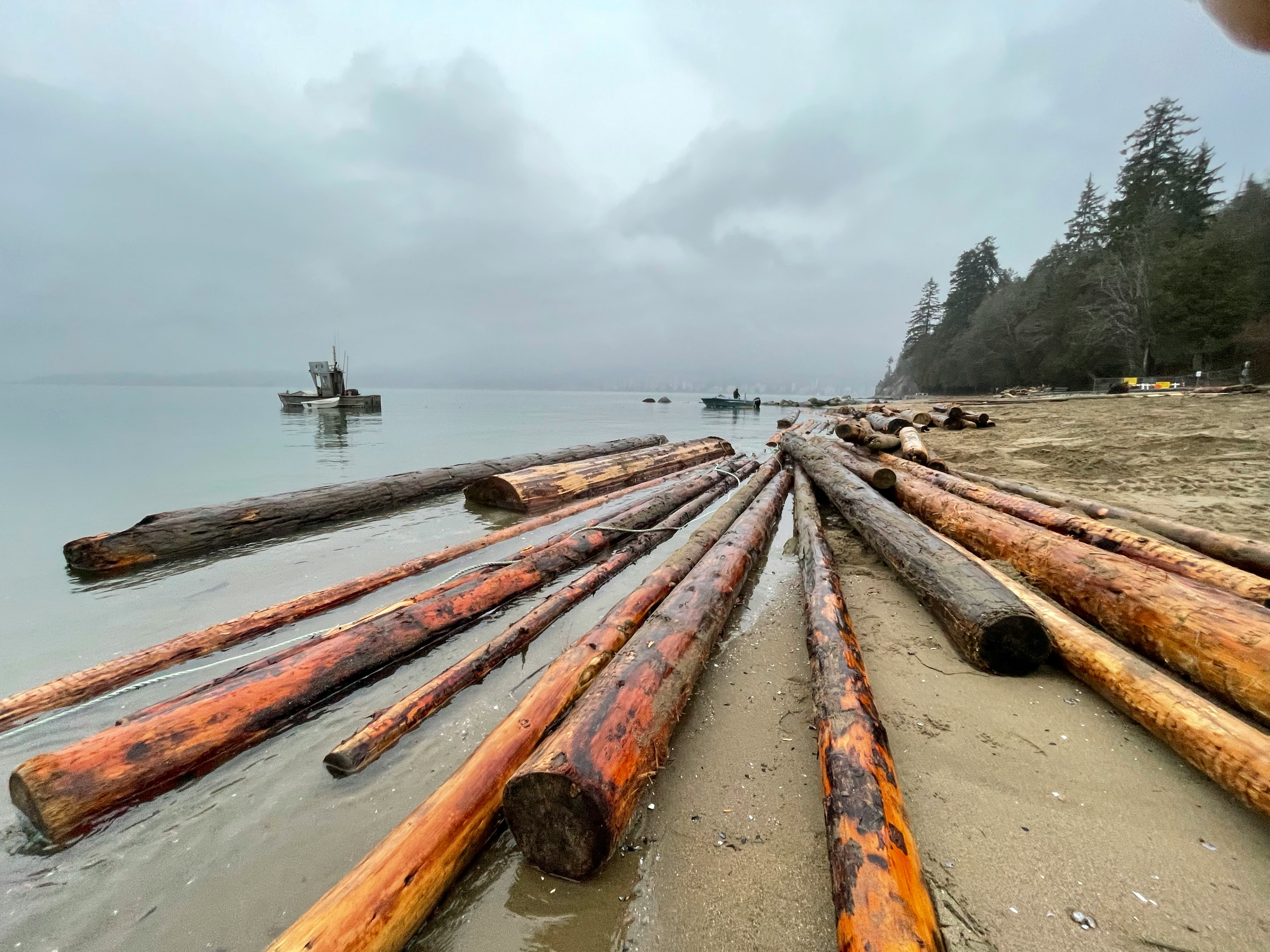
The BC Wildfire Service (BCWS) said this week it expects significant wildfire activity through July and August, citing persistent spring drought and low snowpacks in the Southern Interior and Coastal regions. The season-to-date numbers frame the exposure: 338 wildfires so far in 2026, 5,185 hectares burned, 318 fires extinguished, and 81% of ignitions attributed to human activity (15% lightning, 4% undetermined). As of mid-week 21 fires were active, two of them out of control — including the Saw Creek 'wildfire of note' just outside Lytton, which has now grown to over 700 hectares, up from roughly 600 when we covered it last edition, with its perimeter encroaching on a municipality still rebuilding from the 2021 fire.
The operational angle for fibre is geography. BCWS's Coastal Fire Centre — which includes Vancouver Island — has recorded 84 wildfires, the most of any jurisdiction, though only 163 hectares burned there so far. The Southern Interior and the Fraser Canyon are where drought, low snowpack and freight infrastructure overlap. Highway 1 through the canyon is the primary freight artery between the Lower Mainland and the Interior; the Saw Creek fire already forced a multi-day closure in week one of the season. BCWS notes the longer-term outlook depends on how much rain arrives in the weeks ahead, with cooler, wetter conditions forecast for the south coast starting June 25 — but also lightning expected across many regions mid-week.
Operational read. The watch item is unchanged from Edition 013 and now better quantified: whether fire-driven closures of Highway 1 and the Fraser Canyon rail corridors begin to constrain coast-Interior movement of logs, lumber, chips and pulp at the very moment BCWS expects activity to peak. An 81%-human-caused ignition profile means the risk is partly controllable — burn restrictions and contractor fire discipline directly move the number — but the structural setup (drought, low snowpack, a single primary freight corridor) is not. For operators the concrete brief: track crew and helicopter availability as July ignitions multiply, and treat canyon road and rail reliability as a supply variable, not a background condition.
The Cut · three things to know
1 ·West Fraser declares US$0.32 quarterly dividend, record date June 25 — a steady-payout signal through the duty fog. West Fraser Timber (TSX/NYSE: WFG) declared a quarterly dividend of US$0.32 per share on its Common and Class B Common shares on June 10, payable July 13 to shareholders of record on June 25. The amount is unchanged from the prior quarter. For a diversified producer with more than 50 facilities across Canada, the US, the UK and Europe — lumber, OSB, engineered wood, and northern bleached softwood kraft pulp — a held dividend through an unsettled duty cycle is a modest balance-sheet signal, not a directional one. Display-only; this is a declared corporate action, not a recommendation.
[Source: West Fraser Timber (SEC Form 6-K).]
2 ·Ottawa's Forest Sector Action Plan sets a year-end deadline for a national strategy — the policy backdrop to every BC curtailment. On June 4 in Victoria, Natural Resources Minister Tim Hodgson launched a Forest Sector Action Plan built on the Canadian Forest Sector Transformation Task Force's final report (released June 3, alongside close to $130 million for 56 forest-sector projects). The plan names four priorities — securing competitive and predictable fibre supply, investing in innovation and modernization, expanding domestic and international markets, and supporting workers and communities — and commits federal, provincial and territorial governments to fold the work into a formal Forest Sector Strategy for Canada by the end of 2026. For BC, the most fibre-constrained province, the operative question is how much of the announced support flows to the jurisdiction carrying the most closures, and whether 'predictable fibre supply' translates into actual harvest above the 32-million-cubic-metre floor of the past two years.
[Source: Natural Resources Canada.]